How We Can Help You
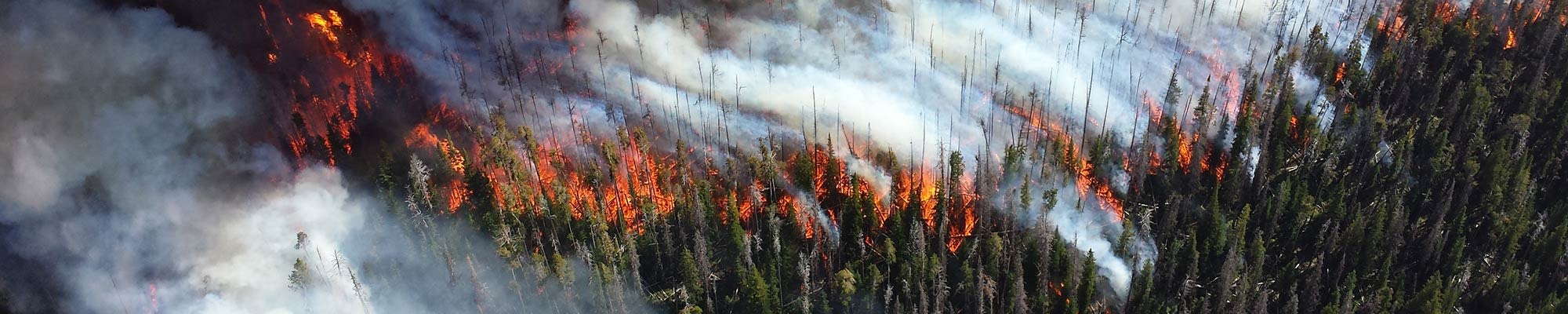
Campbell Scientific builds a family of automated weather stations specifically for fire weather. Our quick-deploy Remote Automated Weather Stations (RAWS) can be set up and transmitting data over GOES satellite in as little as 10 minutes, without tools. The preprogrammed stations provide standard RAWS data and comply with the National Fire Danger Rating System (NFDRS) standard.
Learn moreTo see how our systems meet your application needs, review our case studies »


Instrumentation
We offer a variety of products that can be used to create systems for Fire Weather Stations. Many of the major components used to create these systems are listed below. Please let us know if we can help you configure a system.
More Details about Our Fire Weather Stations Systems
The versatility of the fire weather stations allow them to serve more than one purpose. Our equipment has been used for fire research during prescribed burns, and monitored conditions near fire lines. A suitably sited fire weather station could also be used for avalanche forecasting in the winter or serve as a year-round hydrological monitoring station with the addition of a water-depth sensor.
Sensors used in Fire Weather Stations
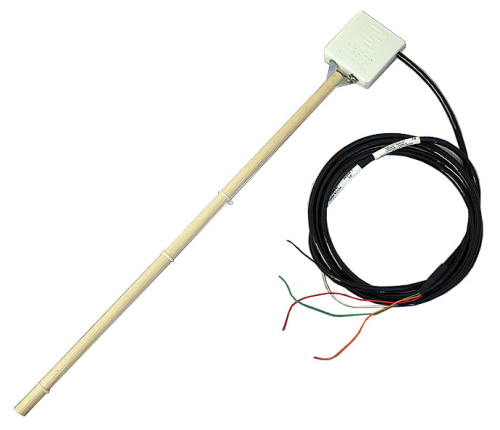
Our fire weather stations are equipped with a suite of high quality meteorological sensors for monitoring wind speed, wind direction, precipitation, air temperature, and relative humidity. Sensors to measure fuel moisture, fuel temperature, soil water content, soil temperature, and solar radiation can also be added to a fire weather station. Campbell Scientific data loggers can interface to many sensors with different output types, and can measure large numbers of sensors.
Telemetry
Data can be transmitted over a variety of telecommunication options, including satellite, telephone, cell phone, and radio. In the United States, GOES1 satellite telemetered data can be collected via NIFC2 and stored to WIMS3 or collected directly from NESDIS4 using Remsoft's WeatherPro and NESDIS module. NFDRS5 indices are calculated using WIMS or WeatherPro. Our High Data Rate GOES transmitter, the TX320, features transmission rates of 1200, 300, and 100 bps.
Quick Deployment Weather Station
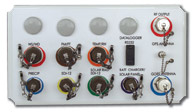
Our RAWS-F Fire Weather Quick Deployment Station is ideal for prescribed burns or other temporary installations. Customers can set up the station in as little as 10 minutes—without tools. Each RAWS-F station is preprogrammed to monitor wind speed and direction, air temperature and relative humidity, precipitation, barometric pressure, and solar radiation sensors. This program complies with the National Fire Danger Rating System (NFDRS) weather station standards.
A RAWS-F station consists of an aluminum environmental enclosure mounted to a 6-ft tripod. The enclosure houses and protects a CR1000 datalogger and a 12-V battery that is recharged via a solar panel or an AC transformer. To facilitate sensor connection, the outside of the enclosure has color-coded, keyed connectors. A wiring panel is also provided allowing the RAWS-F to measure additional sensors.
The RAWS-F typically communicates via our GOES satellite transmitter. It is also compatible with other communication equipment such as telephones, digital cellular transceivers, and radios.
Permanent Weather Stations
Campbell Scientific provides a wide selection of sensors and data transfer peripherals for configuring a custom station that matches the exact requirements of your application. Our fire weather stations feature simplified installation and operation with a standard suite of sensors, a prewired data logger enclosure, color-coded sensor connectors, and a fixed program in the data logger. Custom weather stations are configured from a wider selection of sensors and data transfer peripherals, allowing for greater flexibility in matching an application's exact requirements. Permanent fire weather stations typically use 20-foot instrumentation towers. 10- and 30-foot instrumentation towers and 10-, 15-, and 20-foot tripods are also available.
Data Loggers for Fire Weather Stations
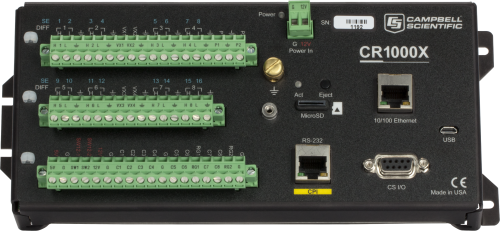
Our measurement systems are based around programmable data loggers that measure the sensors, then process, store, and transmit the data. We offer a family of rugged, reliable data loggers, but the CR1000 is usually suitable for fire weather applications. Our data loggers have programmable execution intervals, wide operating temperature ranges, on-board instructions, and ample input channels for commonly used sensors. Our data loggers interface directly to most sensors, eliminating external signal conditioning.
Data are typically viewed and stored in the units of your choice (e.g., wind speed in mph, m/s, knots). Measurement rates and data recording intervals are independently programmable, allowing calculation of 15-minute, hourly, and daily data values from 1-minute or 1-second measurements, for example. Conditional outputs, such as rainfall intensity and wind gusts, can also be recorded. The program can be modified at any time to accommodate different sensor configurations or new data processing requirements. If needed, channel capacity can be expanded using multiplexers, including a model designed specifically for thermocouples.
1Geostationary Operational Environmental Satellite
2National Interagency Fire Center
3Weather Information Management System (database)
4National Environmental Satellite, Data, and Information Service
5National Fire Danger Rating System
Case Studies
Nearly 100 Campbell Scientific weather stations monitor meteorological parameters as part of New Zealand's fire......read more
Documents
Brochures
Related Product Categories
Associated Links
Articles and Press Releases
Privacy Policy Update
We've updated our privacy policy. Learn More
Customise a System
In addition to our standard systems available, many of the systems we provide are customised. Tell us what you need, and we’ll help you configure a system that meets your exact needs.