How to Decide Where Your Data Should Live
by Scott Ramboz | Updated: 05/18/2026 | Comments: 1
Blog Topics
Area / Application


Product Category


Corporate / News
Search the Blog
Subscribe to the Blog
Get an email when a new article is posted. Choose the topics that interest you most.
Suggest an Article
Is there a topic you would like to learn more about? Let us know.
If you're like me, you get a daily reminder that your cloud storage is almost at capacity. And with every alert, there's that cheerful suggestion that, for a few more dollars each month, you can make the warning go away. But I'm stubborn. I don't want another subscription. So, I clean things up instead: delete old college papers I haven't opened in more than a decade, debate which dog photos deserve to stay, and constantly refresh the screen to make sure the alert is finally gone...
…until it shows up again a week later, and I start the whole process over again.
I eventually got so tired of the constant nudges that I decided to self-host my data, piecing together used hardware, troubleshooting late into the night, and learning firsthand what it takes to manage your own data. It wasn't perfect, and not everything I use can move entirely off the cloud, but it taught me where local control shines and where it becomes a challenge.
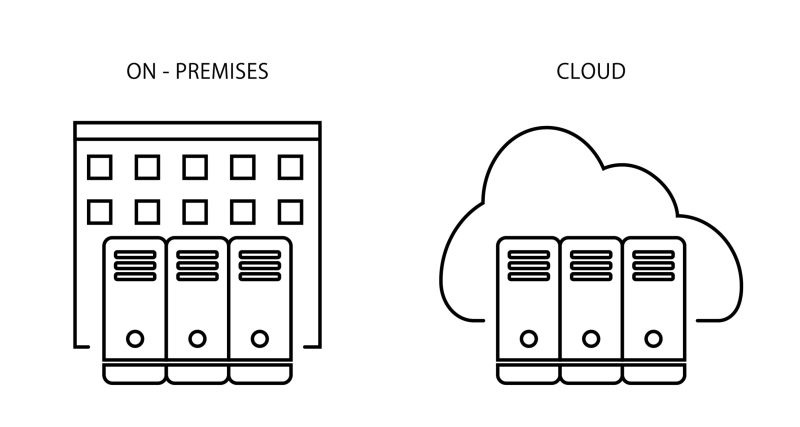
That experience made one thing clear: a single strategy rarely fits everything. Cloud storage is convenient and scales easily, but on-premises storage gives you real control and long-term cost stability. A hybrid approach can give you both. Knowing the tradeoffs is how you stop reacting to storage alerts and start actually planning.
What 50 Years of Data Collection Has Taught Us
For over five decades, Campbell Scientific has built world-class data acquisition systems: data loggers that deliver reliable measurements from quiet suburban backyards to the upper atmosphere and deep within the Earth's crust.
What surprises people who are new to our products is how flexible our approach to data management is. We've supported organizations that keep everything on-premises, teams operating entirely in the cloud, and many other clients running hybrid models. Our goal isn't to dictate where your data should live, but rather to make sure you have the tools to get it stored, securely and reliably.
Every project comes with its own infrastructure and constraints, so our data loggers support a wide range of communications methods: radio, cellular, satellite, fiber-optic, and Ethernet. Whether you're working with what's already in place or building something new, our systems are designed to fit in, not to force a workaround.
Most importantly, the data you collect is yours. What you measure, store, transmit, or archive stays under your control. That principle has guided our work for decades, and it's why customers trust us with their most critical monitoring applications.
Why Cloud Data?
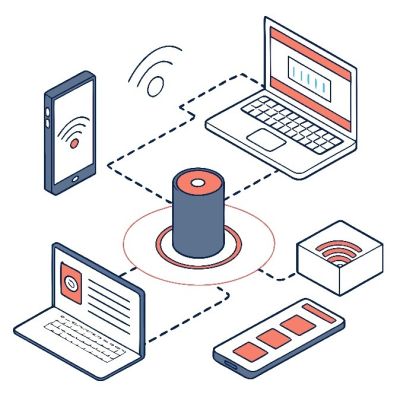
Cloud storage has become the default choice for many organizations, and it's easy to see why. There's no hardware to buy, no infrastructure to set up, and scaling is usually as simple as clicking a button. The provider handles maintenance and uptime while you focus on your work.
Data is stored redundantly across multiple data centers, so your team can gain access to your data from anywhere with an internet connection, which is a real advantage for global teams and multi-site deployments.
That convenience comes at a price though, literally. Subscription fees grow with your data footprint, and what starts as a low upfront cost can become a significant recurring expense. Exceeding storage tiers can trigger unexpected overage charges, so keeping an eye on usage matters.
Security is a shared responsibility. You control access to your data, but enforcing specific policies depends on what the provider's platform allows. Knowing where your control ends and theirs begins is essential.
The cloud also brings capabilities that are hard to build on your own: data visualization, AI and machine learning models, automated workflows, and high-performance computing, all without specialized hardware. These features increasingly offset the ongoing costs and make cloud services attractive for teams that want to do more with their data.
One thing worth knowing: some data acquisition systems generate data faster than wireless networks can handle. Satellite links come with high latency, data caps, and limited throughput. Cellular networks can become throttled or congested. For high-frequency sensor data or dense telemetry, a hardline connection (Ethernet, fiber, or strong local Wi-Fi) is typically required. When it comes to streaming continuous, high-speed data, the network often becomes a bottleneck long before storage does.
Why On-Premises Data?
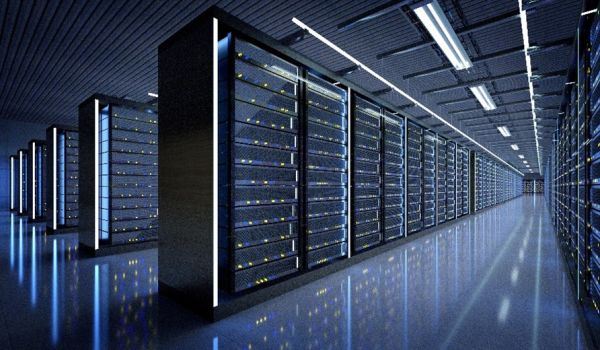
On-premises storage gives you complete control over your data and the accompanying housing hardware. Everything lives within your own walls, under your own rules, which allows for deep customization that cloud platforms don't always offer.
Yes, you'll likely spend more money upfront, but on-premises systems often cost less over time because you're not tied to recurring subscription fees. And while I personally aspire to fill a full 42U rack at home just because it would look amazing, most organizations don't need anything close to that to start. In many cases, a spare computer with an extra drive is a perfectly effective entry point.
That said, you're fully responsible for your own security, backups, monitoring, and troubleshooting. When something breaks, there is no “server fairy” fixing it behind the scenes. Scaling requires physical planning: adding hardware, managing power and cooling, and sometimes expanding your space. And one more practical note: servers are loud. Seriously. Don't deploy them next to people who spend their day on Teams calls unless you enjoy hearing complaints.
When it matters most—real-time processing, low latency, high local bandwidth, strict compliance requirements—on-premises delivers. Modern on-premises solutions handle high-performance analytics, large datasets, and specialized applications well. Many of these solutions connect to cloud services when you need that flexibility too.
Why Hybrid Data Storage?
The good news is that choosing where your data lives isn’t an all-or-nothing decision. This is data storage and not a relationship that you are bound to forever.
A hybrid approach lets some data stay local, on hardware you control, while other data lives in the cloud where you can benefit from easy access, off-site backup, and broader integrations. My family runs a hybrid setup too. As a young child, I once dragged my father's Ph.D. thesis into the computer's trash can. It was recovered, thankfully, but the lesson stuck: keep local copies of what you need immediate control over, and back up everything else to the cloud.
Hybrid systems are more complex to maintain. You're managing two environments simultaneously, which takes intentional planning to keep data organized, synchronized, and accessible. Costs are also harder to predict. You're maintaining hardware while paying for cloud services, and without discipline, charges on both sides can quietly add up.
Done well, hybrid storage is genuinely powerful. It preserves the performance and control of on-premises while delivering the scalability and resilience of the cloud, which is especially valuable for teams with diverse data types or workloads that shift between high-speed local processing and cloud-based collaboration.
One underrated tool worth adding to any hybrid strategy is cold storage. For data you must keep but rarely touch, cold storage tiers are extremely cost-effective. Active files remain on local hardware or a standard cloud tier, while older or less critical data is stored out of the way, durably and affordably, without cluttering your active systems.
So, Where Should Your Data Live?
Before you decide, here's a quick side-by-side comparison of how cloud and on-premises storage compare across the factors that matter most.
| Aspect | Cloud Storage | On-Premises Storage |
|---|---|---|
| Cost | Lower up front/higher long-term | Higher up front/lower long-term |
| Maintenance | Managed by provider | Fully self-managed |
| Scalability | Easily scalable on demand | Additional hardware required |
| Security | Vendor-provided tools | Organization controls all |
| Accessibility | Anywhere with internet | Limited to your network |
| Customization | Limited | Full control |
The right choice depends on what matters most to you. Think about how you use your data today, what your needs might be in five years, and what risks you want to avoid. Those answers will point you toward on-premises, cloud, or a hybrid approach that blends both.
And if you have a server rack you're proud of, send me a picture. My email is below. No judgment here. Cable chaos is part of the human condition.
When you're ready to think through your strategy, we're here to help. Campbell Scientific works with organizations across many industries to evaluate goals and build a clear path forward—whether that means local hardware, cloud services, long-term archival storage, or a mix of all three. Reach out anytime.
Do you have questions about the right storage solutions for your company? Reach out to Scott Ramboz directly at scott.ramboz@campbellsci.com or our sales team at infra-sales-na@campbellsci.com. We’re happy to answer any questions you may have.


About the Author
 Scott Ramboz is an Infrastructure Market Sales Specialist for the US market and also provides inside sales support for the Campbell Scientific Canada regional office. He collaborates with various teams to design practical, real-world monitoring solutions. Scott has a diverse background spanning computer networking, construction, business relations, and accounting, enabling him to comfortably talk about IP addresses, budgets, concrete, or contracts. He takes pride in helping ensure systems are designed correctly the first time.
Comments
Gnev1 | 09/01/2026 at 03:10 PM
Good
Please log in or register to comment.