
Instrumentation
We offer a variety of products that can be used to create systems for Historical Preservation. Many of the major components used to create these systems are listed below. Please let us know if we can help you configure a system.
More Details about Our Historical Preservation Systems
Indoor Historical Preservation Sites
At indoor sites such as museums, our systems can monitor relative humidity, temperature, light, CO2, particulate matter, and many other parameters. Data can be transmitted to a central computer for real-time display or archival and analysis. Automated control based on the measured parameters is also possible. For example, if temperature levels are outside a preset range, the system can activate or shut down HVAC equipment. Alarms can also be triggered or phone numbers dialed to alert key personnel. Our voice-synthesized phone modems can even call and verbally inform you if a problem is detected.
Outdoor Historical Preservation Sites
At outdoor sites, weather stations provide valuable meteorological data on relative humidity, wind speed and direction, temperature, solar radiation, precipitation, and other weather conditions. Parameters influencing structural integrity such as crack size, tilt, vibration, and soil moisture can also be monitored. Indoor and outdoor systems at the same site can be networked.
Monitoring and Control
Our systems are based around battery-powered, programmable dataloggers (measurement and control units) that measure the sensors, then process, store, and transmit the data. Each datalogger has multiple channel types, allowing nearly all sensor types to be measured by a single unit. For example, light, air temperature, and relative humidity sensors can all be measured simultaneously by the same datalogger. Using multiplexers, one datalogger can measure hundreds of sensors. Multiple dataloggers at a site can be networked and transmit data to a single central computer for display, analysis, or archive.
Statistical and mathematical functions are built into our dataloggers, allowing data reduction at the measurement site. For example, if temperature measurements are taken in 10 minute intervals, the datalogger can process the data and output hourly averages with maximum and minimum temperatures. This provides the needed information in fewer numbers, simplifying the data analysis or review process. Measurements can be recorded for historical analysis and displayed in real-time in the desired units of measure (e.g., °F, °C, °K, etc.).
Because our dataloggers are programmable, they are capable of performing responsive measurement and control sequences. Powerful on-board instruction sets allow unattended measurement and control decisions based on time or conditional events. This includes activating or shutting down equipment, sounding alarms, or calling out to phones or pagers. Our systems can even perform functions based on multiple conditions or events, such as deciding to increase or decrease air exchange based on time of day, outside temperature, and/or inside temperature.
The reliability of our control units ensures collection of time-stamped data, even under adverse circumstances. Because they have their own power supply (alkaline or rechargeable batteries), the dataloggers continue to measure and record existing conditions during power outages. Time-stamped data provides valuable information for identifying and verifying past events.
Sensors used in Historical Preservation
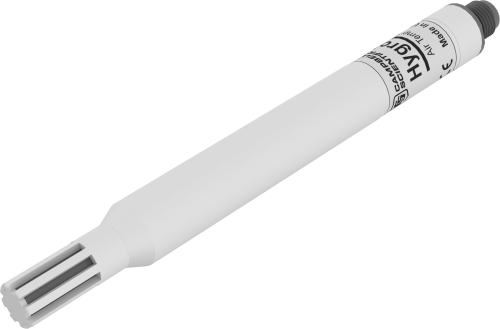
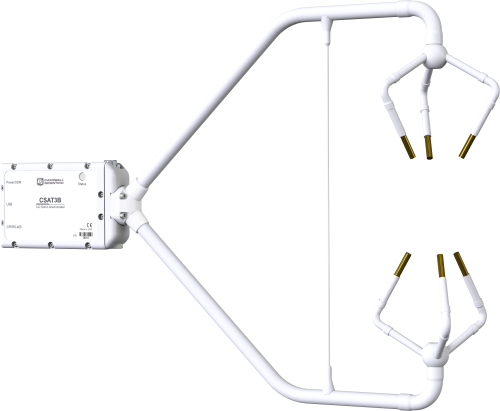
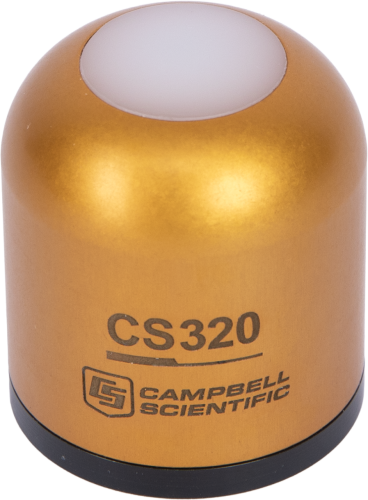
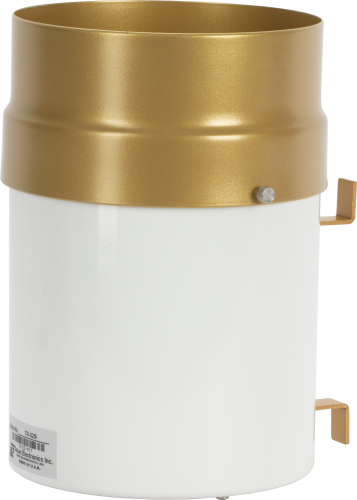
We manufacture many sensors ourselves and offer a wide variety made by other manufacturers. Since our dataloggers are compatible with most available sensors, you have the flexibility to customize a monitoring system to your site.
Communications
Systems can be monitored and controlled by an on-site or remote computer. Telecommunications options for transmitting data and/or reporting conditions of remote sites include: radio, telephone, cellphone, voice-synthesized phone, and satellite. Options likely to be used at sites near the central computer include ethernet and coaxial cable. Options in a network can be mixed. If you want, you can even automate the process of putting your data on the Internet.
Case Studies
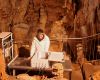
Overview The Chauvet-Pont d'Arc and Aven d'Orgnac caves are home to prehistoric treasures of rare artistic......read more
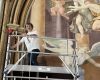
Overview The Royal Chapel of Chaalis Abbey—often referred to as the “French Sistine Chapel”—is a treasure......read more
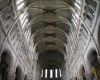
A spectacular fire destroyed three-quarters of the roof of the Basilica of Saint Donatian and......read more
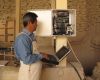
In 1922, when the intact tomb of Tutankhamen was discovered in Egypt's Valley of the......read more
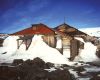
Mawson's Hut, a symbol of Australia's historic past, is one of a group of four......read more
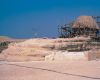
A Campbell Scientific weather station, installed on the back of the Sphinx in May of......read more

Dunhuang (population 100,000) is on the southwestern edge of the Gobi Desert and is situated......read more
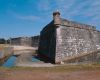
The Castillo de San Marcos National Monument, St. Augustine, Florida, is a 17th Century historic,......read more
Documents
Brochures
Associated Links
Privacy Policy Update
We've updated our privacy policy. Learn More
Customise a System
In addition to our standard systems available, many of the systems we provide are customised. Tell us what you need, and we’ll help you configure a system that meets your exact needs.